
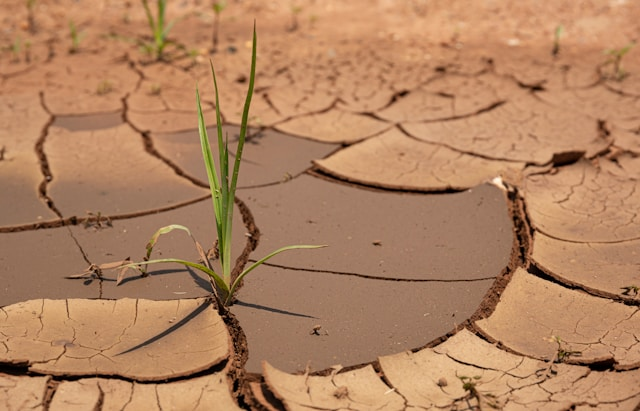
When most people think “drought,” they picture brown lawns, watering limits, and dusty roads. HVAC usually isn’t the first thing that comes to mind.
But in Southwest Florida, drought can quietly change the conditions your air conditioner has to operate in. It can shift outdoor air quality, increase airborne debris, change how often you open windows and doors, and even affect how your home “behaves” with moisture and heat. Those changes can translate into higher run times, faster filter loading, more maintenance needs, and comfort complaints that feel like your system is failing when it’s really battling a new set of environmental stressors.
At Air Conditioning Repair Cape Coral, we like drought as an “awareness angle” because it’s not obvious. If you understand the chain reaction, you can protect your system and your indoor comfort, and avoid the most common drought-season surprises.
The drought backdrop: It’s not just “somewhere else in Florida”
As of early February 2026, Drought.gov shows that 100% of people in Lee County are affected by drought, with 618,754 people counted in areas of drought. That’s our backyard.
On a statewide level, the same federal dashboard reports 16.5 million Florida residents in areas of drought (based on the U.S. Drought Monitor).
And when drought deepens, it tends to come with restrictions. For example, Axios reported that the Southwest Florida Water Management District implemented once-per-week lawn watering rules in the Tampa Bay region through July 1, 2026, tied to a rainfall deficit and drought conditions.
Even if the specific watering schedule varies by district and municipality, the headline is the same: Florida’s dry conditions can be widespread, and they can last long enough to change day-to-day living patterns.
How drought can inadvertently impact your HVAC system
1) Dirtier outdoor air can mean dirtier indoor air (and a harder-working filter)
When the landscape dries out, you often see more loose dust and fine debris kicked up by wind, traffic, lawn equipment, and general daily activity. That dust doesn’t stay outside forever.
It gets pulled into homes through:
- Door openings
- Small envelope leaks (common in Florida homes)
- Duct leakage in attics or garages
- Bathroom fans and other exhaust creating slight negative pressure
Once it’s inside, your HVAC system becomes the “air mover” that circulates that air through return grilles and across your filter. If particulate levels rise, filters can load faster, airflow can drop sooner, and comfort can degrade.
2) Drought can increase wildfire risk, and smoke changes how you should run your system
Drought and wildfire risk are closely linked. Drought.gov explicitly notes that during drought conditions, vegetation can dry out and become more flammable, and that drought can increase the probability of ignition and the rate at which fire spreads.
If smoke becomes a factor anywhere in the region (even at a distance), HVAC operation and filtration move from “comfort” to “health” territory.
The U.S. Environmental Protection Agency recommends strategies during smoke events like:
- Keeping windows and doors closed
- Adjusting HVAC to reduce smoky air entry (recirculation when applicable)
- Upgrading to MERV 13 or higher filtration when the system can support it
- Checking filters often and replacing when dirty
- In some situations, running the HVAC fan continuously to improve particle removal
3) Dry weather shifts how you ventilate the house, which can change load on the system
When it’s humid and stormy, many Florida homeowners keep windows closed by default.
During a dry stretch, some people do the opposite, especially in the evening: windows open, doors used more often, garage in and out, more “fresh air.” That can feel good, but it changes what your HVAC has to correct when you close up again.
Depending on conditions, that can mean:
- More heat coming in (sensible load)
- More particulate matter
- Sometimes less humidity than a typical Florida summer day, but still not necessarily “dry” indoors
4) Drought and heat often travel together, which increases cooling demand
Even without getting overly technical, Drought.gov notes that warmer air temperatures increase evapotranspiration and can lower soil moisture. In plain language: when it’s hotter, the landscape dries faster, and dry conditions can reinforce heat stress in the environment.
For your HVAC, extended heat means:
- Longer run times
- Higher demand during peak hours
- Less “recovery time” for the system overnight during warm spells
The main point: Drought isn’t an HVAC problem, until it is
Drought doesn’t break an air conditioner by itself. What it does is change the environment your system operates in, often in ways that accelerate the normal pain points: airflow restriction, dirty coils, higher run time, and indoor air quality issues.
And this year’s drought signals are not hypothetical. Drought.gov is already showing full-county drought impact in Lee County.
If you’re worried that your system may not be up to the task of an increased workload, get in touch with us for service!
